Introduction to the Materials Science in NANO Tech

Introduction to the Materials Science of Rechargeable Batteries

Cors creat per Digital World
Gratuit
Començatz ara!
Començar d'Aprene Ara

Qué aprendretz?

2 moduls · 6 leçons
Modul 1 · 1 leçon Scientific Overview
Modul 2 · 5 leçons Unit 1: Basic Concepts, Fundamentals, and Definitions

Certificat de Finiment

Acabatz las 6 leiçons per recebre vòstre certificat.

A prepaus del cors

This course will provide an introduction to the fundamentals behind the equilibrium and time-dependent response of existing and emerging chemistries of Li-ion battery materials. Effects of material selection and processing on the performance and reliability are presented as a means to develop conceptual guidelines to understand and improve battery designs. Example applications such as intercalation, SEI, and dendrite growth are presented. Integration of experimental microstructural aspects to coarse-graining measured properties, such as porosity, tortuosity and its associated reactivity, and classic and emerging battery architectures are presented. Principles summarizing the response of battery architectures are formulated and applied to propose battery design guidelines, to review existing porous electrode theory descriptions, and to summarize the current state-of-the-art of battery technology and its associated metrology.

Mai d'info

A prepaus de l'ensenhaire

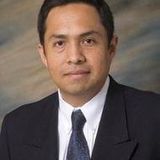
R. Edwin García

Professor in Materials Engineering at Purdue University in West Lafayette

R. Edwin García is a Professor in Materials Engineering at Purdue University in West Lafayette, Indiana (2016-present). He earned the Physics degree at the National University of Mexico in 1996, his Masters in Materials Science and Engineering in 2000, and his Ph.D. in Materials Science and Engineering at MIT in 2003. He held a postdoctoral researcher appointment at the National Institute of Standards and Technology from 2002 to 2003. He has 15 years of experience in the modeling and simulation of rechargeable lithium-ion battery materials. His research group focuses on the development models, theories, and guidelines that will lead to experiments and processing operations with improved properties, performance, and reliability.

Mai d'info