From the Big Bang to Dark Energy

Big Bang to Dark Energy

Kors maħluq minn Digital World
Bla ħlas
Ibda issa stess!
Ibda Titgħallem Issa

X'se titgħallem?

4 moduli · 11 lezzjonijiet
Modulu 1 · 1 lezzjoni Introduction
Modulu 2 · 2 lezzjonijiet Revolution of the Earth
Modulu 3 · 2 lezzjonijiet Understanding Ellipses and Gravity
Modulu 4 · 6 lezzjonijiet Beginning of the Universe Look Far into the Past, and Cosmic Expansion

Ċertifikat ta' Tlestija

Lesti l-lezzjonijiet kollha tal-kors (11) biex tirċievi ċ-ċertifikat tiegħek.

Dwar il-kors

We have learned a lot recently about how the Universe evolved in 13.7 billion years since the Big Bang. More than 80% of matter in the Universe is mysterious Dark Matter, which made stars and galaxies to form. The newly discovered Higgs-boson became frozen into the Universe a trillionth of a second after the Big Bang and brought order to the Universe. Yet we still do not know how ordinary matter (atoms) survived against total annihilation by Anti-Matter. The expansion of the Universe started acceleration about 7 billion years ago and the Universe is being ripped apart. The culprit is Dark Energy, a mysterious energy multiplying in vacuum. I will present evidence behind these startling discoveries and discuss what we may learn in the near future.

This course is offered in English.


Aktar informazzjoni

Dwar l-għalliem

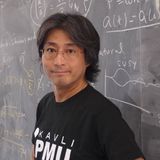
Hitoshi Murayama

MacAdams Professor of Physics, University of California, Berkeley The University of Tokyo

Hitoshi Murayama received his Ph.D. in theoretical physics from University of Tokyo in 1991. He worked as a Research Associate at Tohoku University from April 1991, and was a postdoctoral fellow at Lawrence Berkeley National Laboratory from September 1993. He joined the Physics Department at UC Berkeley in July 1995, became an Associate Professor in July 1998, and Professor in July 2000. Professor Murayama was also the Director of Kavli Institute for the Physics and Mathematics of the Universe (Kavli IPMU), The University of Tokyo Institutes for Advanced Study (UTIAS), from 2013 to 2018. He received Yukawa Commemoration Prize in Theoretical Physics and is a Fellow of American Physical Society. He is elected to 2013 Fellow of American Academy of Arts and Sciences. He is well-known for his clear lectures for students and general audience.

Aktar informazzjoni